
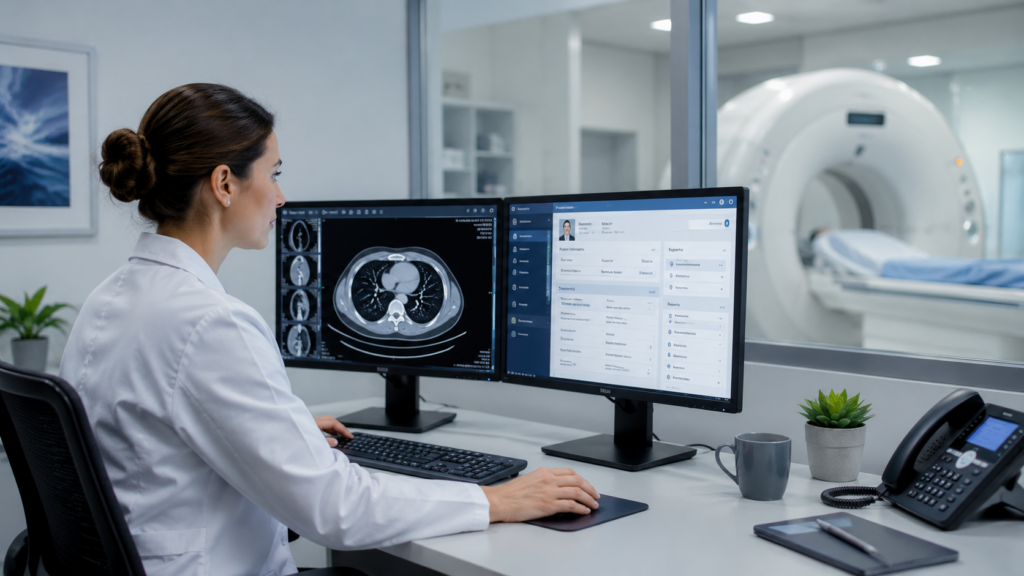
Radiology teams are under growing pressure to deliver faster imaging interpretations, support more care sites, manage rising exam volumes, and maintain reporting accuracy without adding unnecessary administrative friction. For many hospitals, urgent care centers, imaging facilities, and private practices, one of the most effective ways to relieve that pressure is through better alignment between PACS and the EHR workflow.
When PACS and EHR systems work together seamlessly, imaging teams spend less time chasing information, re-entering data, switching between platforms, and resolving preventable workflow delays. Instead, radiologists, technologists, schedulers, and referring providers can operate from a more connected environment where images, orders, reports, patient history, and communication pathways are easier to access and manage.
For radiology departments already facing staffing shortages, after-hours coverage gaps, and mounting turnaround time expectations, a streamlined EHR workflow solution can play a meaningful role in reducing burnout and improving operational performance.
Why Radiology Administrative Burden Continues to Grow
Radiology has always required precision, coordination, and speed. But today’s imaging teams are often asked to do more with fewer resources. Administrative responsibilities can pile up quickly when workflows depend on disconnected systems or manual handoffs.
Common sources of radiology admin burden include:
- Manually matching imaging orders with patient records
- Searching multiple systems for prior studies or clinical history
- Re-entering patient or exam information
- Following up on missing documentation
- Managing report distribution across different care settings
- Tracking turnaround times manually
- Handling after-hours escalation and communication gaps
- Correcting preventable order, modality, or demographic errors
These tasks may seem small individually, but they can consume valuable clinical time. Over time, repetitive administrative friction contributes to fatigue, delays, frustration, and burnout among radiologists and support staff.
How PACS and EHR Workflow Integration Supports Imaging Teams
PACS gives radiologists access to medical images, while EHR systems organize the broader patient record. When these platforms are integrated effectively, imaging teams can work from a more complete clinical picture with fewer manual steps.
A connected EHR workflow helps ensure that imaging orders, clinical indications, patient history, prior reports, and diagnostic images move through the radiology process more efficiently. This allows imaging teams to spend less time managing logistics and more time focusing on interpretation quality, care coordination, and patient outcomes.
Strong PACS and EHR workflow integration can support:
- Faster access to relevant patient data
- More accurate order-to-image matching
- Reduced duplicate documentation
- Better visibility into exam status
- Improved communication between radiology and referring providers
- More efficient report delivery
- Smoother collaboration between on-site and remote radiology teams
The result is a more organized imaging environment where fewer tasks fall through the cracks.
Reducing Burnout Through a More Efficient EHR Workflow
Burnout in radiology is not only caused by clinical complexity. It is also driven by constant interruptions, inefficient processes, administrative overload, and the pressure to maintain speed without sacrificing accuracy.
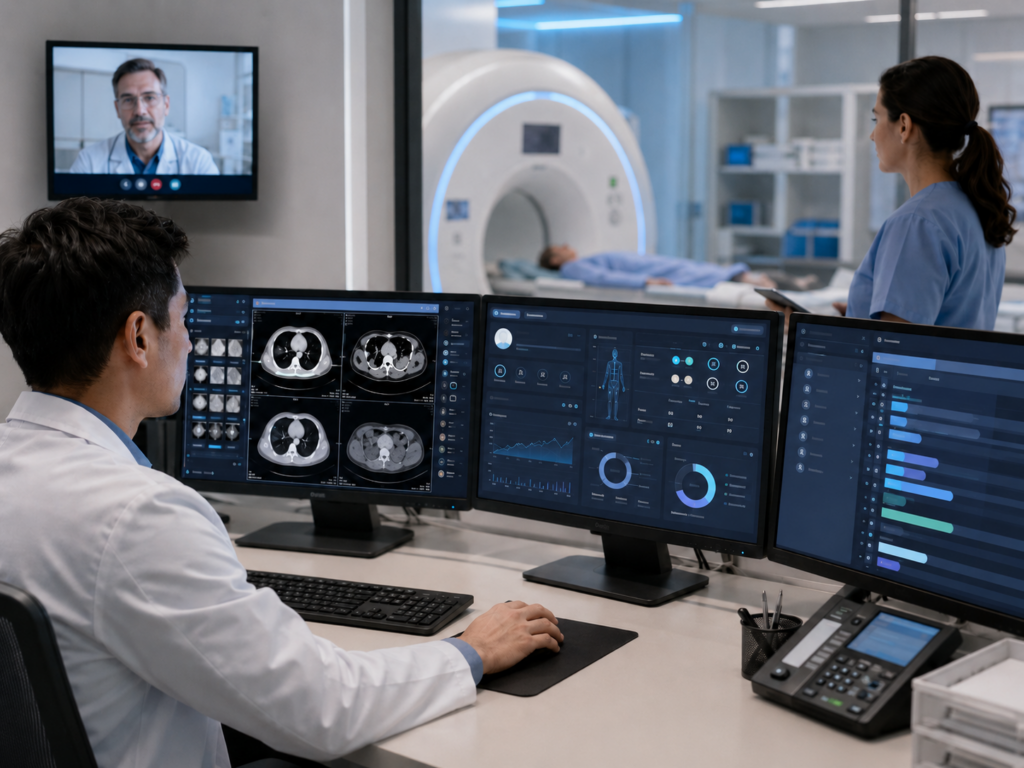
A streamlined EHR workflow can reduce these stressors by removing unnecessary steps from the imaging process. When radiologists can access the information they need without leaving the reading environment, they can interpret studies more efficiently and with fewer workflow disruptions.
For technologists and administrative teams, integrated workflows also reduce time spent correcting errors, tracking down missing information, or manually updating exam status. This creates a smoother experience across the imaging team, not just for the interpreting radiologist.
An effective EHR workflow solution helps reduce burnout by:
- Minimizing repetitive data entry
- Reducing avoidable interruptions
- Improving access to patient history
- Supporting faster report completion
- Limiting communication delays
- Creating clearer handoffs between teams
- Reducing uncertainty around exam status and next steps
When workflows are easier to follow, teams can operate with more confidence and less daily friction.
EHR Workflows Improve Radiology Turnaround Times
Turnaround time is one of the most important operational benchmarks in radiology. Delays can affect emergency care, outpatient scheduling, care planning, and patient satisfaction.
Disconnected systems often slow turnaround times because radiologists and support teams have to pause for missing information, incomplete orders, or manual communication. Integrated EHR workflows help reduce those delays by making the right information available earlier in the process.
For example, when the EHR workflow is connected to PACS, imaging teams can more easily confirm:
- Patient demographics
- Ordering provider details
- Clinical indications
- Prior imaging history
- Exam status
- Report availability
- Critical result communication pathways
This level of visibility supports faster interpretations and more reliable reporting cycles, especially for high-volume imaging environments or facilities that need after-hours radiology support.
Improving Report Accuracy With a Better EHR Workflow Solution
Radiology accuracy depends on both clinical expertise and access to the right information. A radiologist interpreting an exam without adequate clinical context may need to spend extra time searching for details or clarifying the order.
A well-designed EHR workflow solution helps reduce that risk by connecting imaging data with relevant clinical information. When radiologists can view prior studies, patient history, ordering notes, and clinical context more efficiently, they are better positioned to produce clear, accurate, and actionable reports.
This also benefits referring providers. Reports can be delivered more consistently into the EHR, helping care teams access findings quickly and make informed decisions without unnecessary delays.
How EHR Workflows Support Remote and Teleradiology Teams
As more healthcare organizations use teleradiology to support after-hours coverage, subspecialty access, overflow volume, and staffing flexibility, workflow integration becomes even more important.
Remote radiologists need secure, reliable access to imaging studies, relevant clinical history, and reporting tools. If PACS and EHR workflows are not aligned, teleradiology teams may face delays that affect turnaround times and communication.
Integrated workflows help remote radiology partners operate as an extension of the on-site team. They also make it easier to standardize protocols, route exams appropriately, manage coverage expectations, and maintain accountability across multiple locations.
For healthcare organizations working with a teleradiology partner, strong EHR workflow alignment can support:
- Faster case routing
- Better access to clinical context
- Clearer escalation processes
- More consistent report delivery
- Stronger quality assurance
- More reliable after-hours and emergency coverage
- Better continuity between in-house and remote radiologists
Key Benefits of PACS and EHR Workflow Integration for Imaging Teams
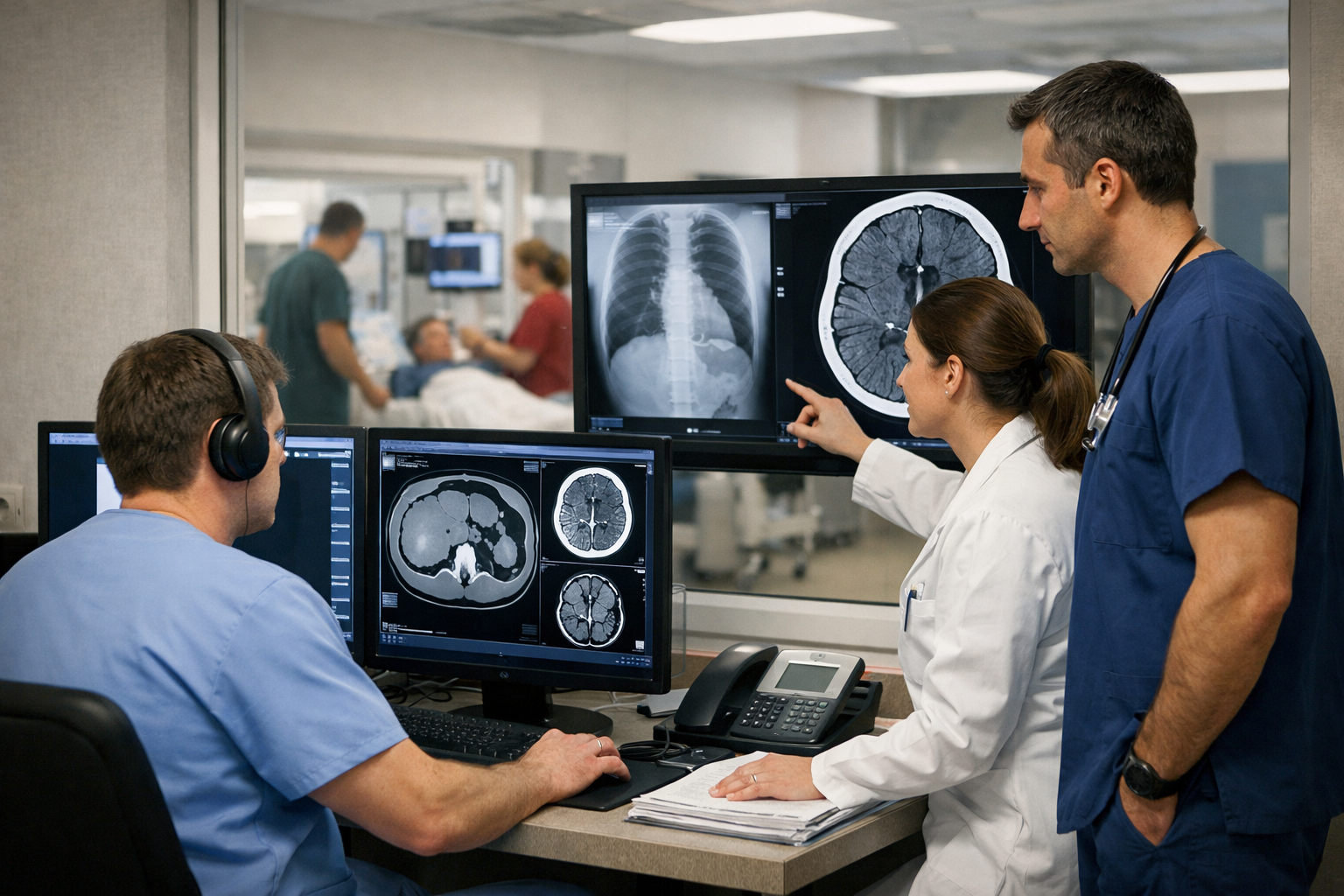
When PACS and EHR systems are integrated thoughtfully, imaging teams can experience meaningful improvements across daily operations.
1. Less Manual Work
Automated data flow reduces the need for staff to manually enter, verify, and transfer information between systems.
2. Fewer Workflow Errors
Integrated EHR workflows reduce the risk of mismatched patient records, incomplete documentation, and delayed reporting.
3. Better Radiologist Focus
Radiologists can spend more time interpreting studies and less time navigating disconnected platforms.
4. Stronger Communication
Referring providers, radiologists, and support teams benefit from clearer visibility into exam status, report availability, and follow-up needs.
5. Faster Patient Care
When reports move more efficiently from image acquisition to interpretation to delivery, providers can act on results sooner.
6. Better Staff Satisfaction
Reducing repetitive administrative tasks can improve morale and help teams feel more supported in their day-to-day work.
Choosing an EHR Workflow Solution That Supports Radiology Operations
Not every EHR workflow solution is designed with radiology complexity in mind. Imaging teams need workflows that support speed, accuracy, security, interoperability, and scalability.
When evaluating PACS and EHR workflow improvements, healthcare organizations should look for solutions and partners that can support:
- Reliable image and report exchange
- Secure access for authorized users
- Compatibility with existing systems
- Efficient case routing
- Customizable site-specific protocols
- Clear service-level expectations
- Support for multiple modalities
- After-hours operational needs
- Subspecialty coverage requirements
The right workflow strategy should reduce complexity rather than add another layer of administrative work.
Specialty Focused Radiology: A Trusted Nationwide Teleradiology Partner
Specialty Focused Radiology is a trusted teleradiology partner providing fast, accurate diagnostic imaging interpretations for hospitals, urgent care centers, imaging facilities, and private practices across the United States. Our board-certified radiologists offer after-hours coverage, including final reads, preliminary reports, and second opinions across major imaging modalities such as X-ray, CT, MRI, PET, Ultrasound, and 2D and 3D Mammography.
We also provide subspecialized coverage, including pediatric radiology, to help healthcare organizations fill staffing gaps, improve access to expertise, and maintain reliable radiology support around the clock. With a focus on speed, quality, and personalized service, Specialty Focused Radiology helps imaging teams reduce operational pressure while supporting better patient outcomes.
How Our sTAAS Model Strengthens EHR Workflows and Radiology Support
Specialty Focused Radiology’s sTAAS model, or Specialty Teleradiology as a Service, is designed for healthcare organizations that need more than transactional read volume. It is a partnership-based teleradiology model built to provide reliable access to specialty radiologists without the complexity of building and maintaining that capability in-house.
Through sTAAS, we embed into your workflows, develop site-specific protocols, and align our service structure with your clinical, operational, and financial goals. This approach supports smoother PACS and EHR workflow integration, clearer expectations, structured service-level agreements, and regular operational syncs. For imaging teams facing burnout, staffing shortages, or workflow inefficiencies, sTAAS offers a more accountable and scalable way to strengthen radiology performance.
Build a More Efficient Radiology EHR Workflow With Specialty Focused Radiology
A seamless PACS and EHR workflow can help radiology teams reduce administrative burden, improve turnaround times, support reporting accuracy, and create a more sustainable work environment for medical professionals. When imaging teams have better access to patient information, clearer communication pathways, and fewer manual tasks, they can focus more fully on delivering timely, high-quality care.
Specialty Focused Radiology is here to help hospitals, urgent care centers, imaging facilities, and private practices strengthen radiology coverage with dependable nationwide teleradiology services. Whether you need final reads, preliminary reports, second opinions, subspecialty pediatric support, after-hours coverage, or a long-term sTAAS partnership, our team is ready to support your workflow and patient care goals.
Contact Specialty Focused Radiology today to get started and learn how our trusted teleradiology services can help reduce radiology admin burden while improving speed, accuracy, and continuity of care.d learn how our team can support your radiology PACS workflow with reliable, high-quality teleradiology coverage.
FAQs
An EHR workflow in radiology refers to the process of managing imaging orders, patient information, reports, and communication through an electronic health record system. When connected with PACS, an EHR workflow helps imaging teams access the clinical context they need while reducing manual administrative steps.
An EHR workflow solution can reduce burnout by removing repetitive administrative tasks, limiting unnecessary interruptions, and making patient information easier to access. This allows radiologists and imaging staff to spend more time on clinical work and less time navigating disconnected systems.
Integrated EHR workflows can help reduce manual order matching, duplicate documentation, report tracking, patient demographic corrections, and follow-up communication. By streamlining these tasks, imaging teams can work more efficiently and reduce preventable workflow frustration.
Healthcare organizations should look for an EHR workflow solution that supports secure data exchange, PACS compatibility, efficient case routing, reliable report delivery, and customizable protocols. The best solution should reduce administrative burden without creating additional complexity for imaging teams.