

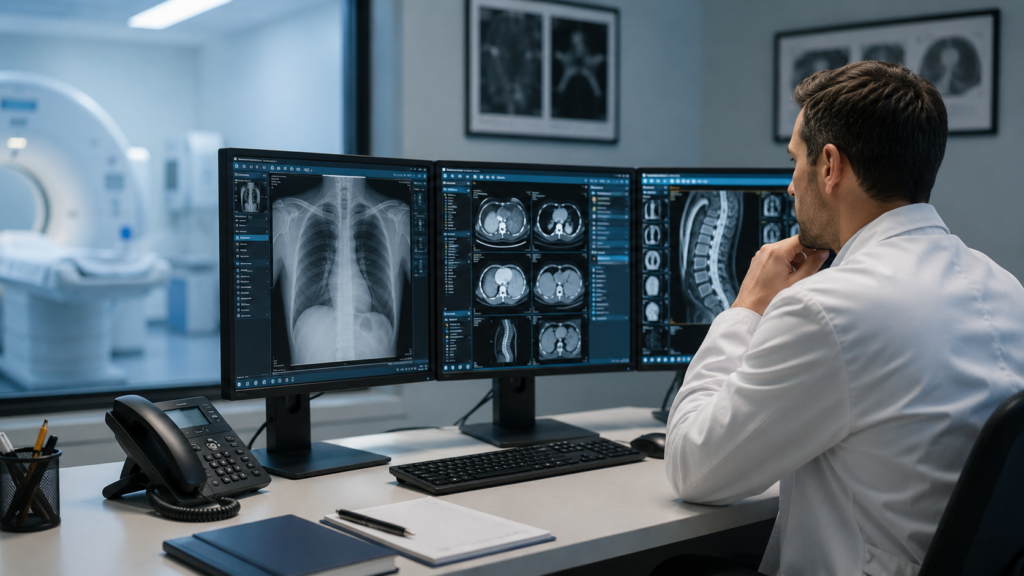
Modern radiology depends on speed, accuracy, secure image access, and smooth communication between clinical teams. When a patient receives an X-ray, CT scan, MRI, ultrasound, PET scan, or mammogram, those images need to be stored, reviewed, shared, compared, reported, and protected. That is where a radiology PACS becomes essential.
For healthcare organizations asking “what is PACS system in radiology”, the answer is simple: PACS stands for Picture Archiving and Communication System. It is the digital infrastructure used to store, retrieve, distribute, and display medical images. Instead of relying on film, CDs, disconnected workstations, or manual transfer processes, a PACS system for radiology gives radiologists, technologists, referring providers, and care teams centralized access to imaging studies and related data.
When implemented well, PACS helps radiology teams work faster, reduce delays, improve collaboration, protect patient information, and support better clinical decision-making.
What Is a PACS System in Radiology?
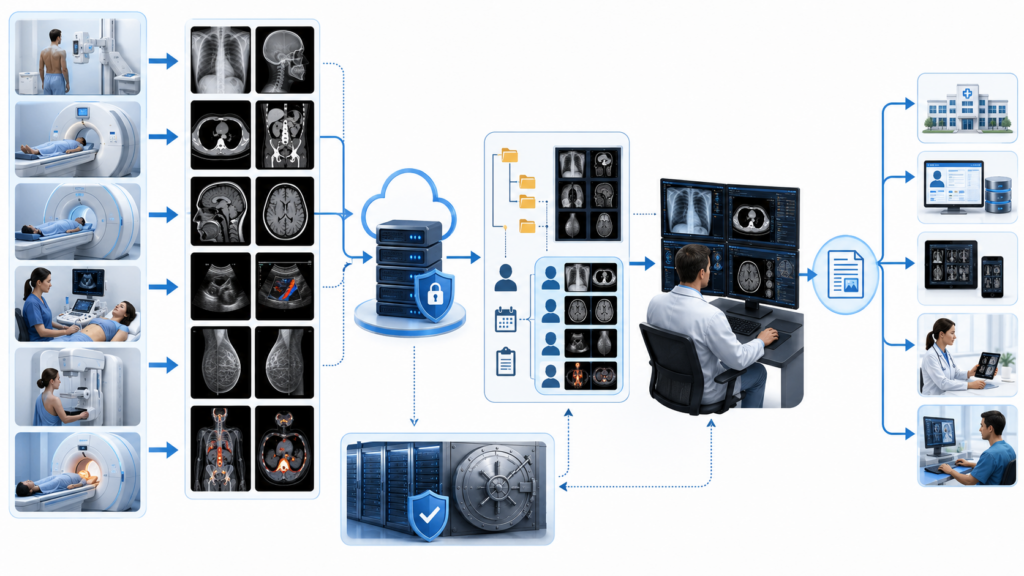
A PACS system in radiology is a digital image management platform that allows medical imaging studies to move securely from imaging equipment to radiologists and other authorized healthcare professionals. PACS receives images from modalities such as CT, MRI, X-ray, ultrasound, mammography, PET, PET-CT, and other imaging systems.
Once images are captured, PACS organizes and stores them so they can be viewed, interpreted, compared with prior exams, and shared across the care team. In many environments, PACS works alongside other healthcare technology systems, including:
- RIS, or Radiology Information System, which manages scheduling, reporting, and radiology workflow details.
- EHR/EMR, or Electronic Health Record systems, which connect imaging information to the patient’s broader medical record.
- DICOM, the standard format used for medical imaging data.
- HL7 or FHIR interfaces, which help systems exchange patient, order, and report information.
In practical terms, radiology PACS acts as the digital backbone of imaging operations. It helps ensure the right study reaches the right radiologist at the right time.
Why Radiology PACS Replaced Film-Based Imaging Workflows
Before PACS became widely used, imaging departments relied heavily on physical film. Film-based workflows created several challenges. Studies could be misplaced, delayed, damaged, or unavailable when needed. Sharing images between locations often required physical transport, courier services, or duplicate copies.
A modern PACS system for radiology solves many of these limitations by making medical images digitally available to authorized users. This shift has helped imaging departments become faster, more scalable, and more connected.
Key advantages over film-based workflows include:
- Faster image access after acquisition.
- Easier comparison with prior exams.
- Reduced physical storage needs.
- Improved collaboration between radiologists and referring providers.
- Better support for remote interpretation and teleradiology.
- More consistent recordkeeping and image availability.
For hospitals, urgent care centers, imaging centers, and private practices, PACS is no longer just a technology upgrade. It is a core part of safe, efficient diagnostic imaging.
How a PACS System for Radiology Works
Although PACS technology can be complex behind the scenes, the basic workflow is straightforward.
First, the imaging modality captures the patient’s images. The modality may be an X-ray unit, CT scanner, MRI scanner, ultrasound machine, mammography system, PET scanner, or another imaging device. The images are then converted into DICOM format and sent to PACS.
Next, the PACS stores the images and associates them with the correct patient, exam, date, modality, and clinical information. Radiologists can then open the study on a diagnostic workstation, review the images, compare them to prior exams, and create a report.
Once the interpretation is complete, the report can be sent back through the radiology workflow, often through a RIS, EHR, or reporting platform. Referring providers can then access the results and use them to guide patient care.
A typical radiology PACS workflow may include:
- Image acquisition from the imaging modality.
- Image transfer into PACS using DICOM.
- Study storage and indexing for easy search and retrieval.
- Diagnostic interpretation by a radiologist.
- Report creation and distribution to the ordering provider.
- Long-term image archiving for future comparison and compliance needs.
Core Features of a Radiology PACS
A strong radiology PACS does more than store images. It supports the entire imaging lifecycle, from acquisition to interpretation to long-term access.
Common features include:
- Centralized image storage for multiple modalities and locations.
- Diagnostic image viewing with tools for zooming, windowing, measuring, annotating, and comparing studies.
- Prior exam comparison to help radiologists assess changes over time.
- Secure image sharing between authorized clinicians, facilities, and radiology partners.
- Workflow routing to send studies to the correct radiologist or reading group.
- Integration with RIS and EHR systems to reduce duplicate data entry and improve continuity.
- Audit trails and access controls to support privacy and compliance.
- Cloud or hybrid storage options for scalability and business continuity.
- Teleradiology support for remote reading, after-hours coverage, and subspecialty interpretation.
For imaging organizations with multiple sites, PACS can also standardize how studies are stored and accessed across the enterprise.
How Radiology PACS Helps Teams Work Faster
Speed is one of the biggest advantages of a PACS system for radiology. In many clinical settings, delays in image access can slow down diagnosis, treatment planning, and patient throughput.
A well-designed radiology PACS helps teams work faster by reducing manual steps. Images can be available to radiologists almost immediately after acquisition. Prior exams can be pulled up quickly for comparison. Referring providers can receive reports and access images without waiting for physical media or manual transfers.
PACS can improve speed in several ways:
- Faster study availability: Images are digitally routed to radiologists soon after capture.
- Reduced manual handling: Staff no longer need to print film, burn CDs, or move physical files.
- Quicker prior comparisons: Historical studies can be retrieved directly in the viewer.
- Better worklist management: Exams can be prioritized by urgency, modality, location, or specialty.
- Remote reading support: Teleradiologists can interpret studies without being physically onsite.
- Improved turnaround times: Streamlined image access helps radiologists complete reads more efficiently.
This is especially valuable for emergency departments, urgent care centers, trauma workflows, stroke protocols, inpatient care, and high-volume outpatient imaging centers.
How a PACS System for Radiology Supports Safer Imaging Workflows
Safety in radiology is not only about image quality. It also involves accurate patient matching, secure data access, timely communication, and reliable availability of prior studies. A radiology PACS supports safer imaging workflows by helping teams reduce avoidable errors and improve visibility.
For example, access to prior imaging can help radiologists identify whether a finding is new, stable, improving, or worsening. This can reduce unnecessary repeat imaging and support more confident interpretations. Secure access controls also help protect sensitive patient information.
A PACS system for radiology can support safety through:
- Accurate patient-study matching when integrated properly with RIS and EHR systems.
- Easy access to prior exams for longitudinal comparison.
- Secure user permissions that limit access to authorized users.
- Audit logs that track who accessed or modified imaging information.
- Reliable image availability for urgent clinical decision-making.
- Structured workflows that help route critical exams appropriately.
- Reduced risk of lost studies compared with physical film or manual transfer methods.
In time-sensitive cases, faster access to images and reports can directly affect care coordination and patient outcomes.
Radiology PACS and Teleradiology: Why They Work Together
Teleradiology depends on reliable image transfer, secure remote access, and efficient reporting workflows. PACS plays a central role in making that possible.
When a hospital, urgent care center, imaging facility, or private practice works with a teleradiology partner, imaging studies must be routed securely from the facility to the radiologist. A properly configured PACS system for radiology helps ensure those studies are available for interpretation without unnecessary delays.
This is especially important for:
- After-hours and emergency coverage.
- Preliminary “wet-read” reports.
- Final teleradiology reports.
- Second opinion interpretations.
- Subspecialty reads.
- Pediatric radiology support.
- Overflow coverage during high-volume periods.
- Fractional or part-time radiology staffing models.
PACS helps connect the imaging site, radiologist, and referring provider into one coordinated workflow. When paired with a strong teleradiology model, it allows healthcare organizations to expand access to radiology expertise without building every capability in-house.
Key Benefits of Radiology PACS for Healthcare Organizations
A radiology PACS can improve both clinical and operational performance. The benefits are especially clear for organizations managing high imaging volumes, multiple locations, limited staffing, or growing demand for specialty reads.
Improved Radiologist Efficiency
Radiologists can read from digital worklists, compare priors, access clinical context, and use advanced viewing tools from a single environment. This reduces friction and helps radiologists focus more time on interpretation.
Faster Turnaround Times
Digital image routing can reduce delays between image acquisition and interpretation. This helps healthcare providers move patients through diagnosis and treatment more efficiently.
Stronger Collaboration
Referring physicians, technologists, radiologists, and specialists can access the same imaging information when needed. This makes communication easier and supports more coordinated care.
Better Access to Subspecialty Expertise
With PACS-enabled teleradiology, facilities can route complex cases to radiologists with relevant subspecialty experience, including pediatric radiology, musculoskeletal imaging, neuroradiology, body imaging, breast imaging, and more.
Reduced Administrative Burden
Digital storage and transfer reduce the need for manual film handling, physical archives, CD burning, and courier-based workflows.
Scalable Imaging Operations
As imaging volume grows, PACS can help organizations scale more effectively. Cloud-based and hybrid PACS models can also support multi-site access, disaster recovery, and flexible storage strategies.
What to Look for in a PACS System for Radiology
Not every PACS platform is the same. Healthcare organizations should evaluate a PACS system for radiology based on clinical workflow needs, technical requirements, security standards, and integration capabilities.
Important considerations include:
- Compatibility with major imaging modalities.
- Reliable DICOM support.
- Integration with RIS, EHR, and reporting systems.
- Fast image loading and viewing performance.
- Strong cybersecurity and HIPAA-aligned access controls.
- Easy prior exam retrieval.
- Customizable worklists and routing rules.
- Support for remote reading and teleradiology.
- Cloud, on-premise, or hybrid deployment options.
- Scalable storage and disaster recovery planning.
- User-friendly tools for radiologists, technologists, and clinicians.
- Vendor support and implementation experience.
The right PACS should fit the organization’s clinical workflow rather than forcing teams into inefficient processes.
Tailored Innovation: Custom PACS Solutions via Our 3Dnet Biotronics3D Partnership
Every healthcare facility has unique operational demands, and a one-size-fits-all PACS rarely unlocks your full potential. To bridge this gap, Specialty Focused Radiology has partnered with 3Dnet Biotronics3D to deliver fully customized, cloud-native PACS architectures tailored specifically to your clinical environment.
By combining Specialty Focused Radiology’s deep clinical expertise with 3Dnet Biotronics3D’s cutting-edge enterprise imaging technology, we design, build, and deploy bespoke PACS solutions that adapt to your workflow—not the other way around.
What Our Custom PACS Partnerships Offer:
Bespoke Workflow Engineering: We collaborate directly with your IT and clinical leadership to build customized worklists, custom routing rules, and intelligent teleradiology pipelines.
True Cloud-Native Power: Leverage 3Dnet’s ultra-fast, zero-footprint web viewer and highly scalable cloud infrastructure to eliminate heavy on-site hardware dependencies.
Advanced 3D Post-Processing: Deeply integrated, advanced visualization tools directly inside your customized viewer for complex subspecialty interpretations.
End-to-End Synergy: Complete alignment between your local imaging modalities, our custom-built infrastructure, and the sTAAS teleradiology model—creating a unified ecosystem from scan to final report.
Ready to build an imaging infrastructure that fits your practice perfectly? Contact Specialty Focused Radiology today to explore how our partnership with 3Dnet Biotronics3D can engineer a custom PACS solution for your organization.
Common Challenges With Radiology PACS Implementation
While PACS can transform imaging workflows, implementation requires careful planning. Poor configuration, weak integrations, or unclear workflows can create bottlenecks.
Common challenges include:
- Migrating legacy imaging archives.
- Connecting PACS with RIS and EHR platforms.
- Matching patient identifiers across systems.
- Training radiologists, technologists, and administrative staff.
- Managing cybersecurity risks.
- Maintaining uptime and disaster recovery readiness.
- Creating consistent routing rules for teleradiology and subspecialty reads.
- Balancing storage costs with long-term image retention needs.
Successful implementation often depends on involving clinical, operational, IT, compliance, and radiology stakeholders early in the process.
How Radiology PACS Improves Patient Care
The purpose of radiology technology is not simply to move images faster. The ultimate goal is better patient care.
A modern radiology PACS can help patients by supporting faster diagnosis, fewer delays, easier access to prior studies, and better coordination between healthcare providers. When radiologists can quickly review high-quality images and relevant prior exams, they are better equipped to provide accurate interpretations.
For patients, this can mean:
- Shorter waits for imaging results.
- Fewer repeated imaging studies when priors are available.
- Faster escalation for urgent findings.
- Better continuity across care locations.
- More timely treatment decisions.
In radiology, workflow efficiency and patient safety are closely connected. When images and reports move smoothly, care teams can act with greater confidence.
Specialty Focused Radiology: A Trusted Nationwide Teleradiology Partner
Specialty Focused Radiology is a trusted teleradiology partner providing fast, accurate diagnostic imaging interpretations for hospitals, urgent care centers, imaging facilities, and private practices across the U.S. Our board-certified radiologists provide after-hours coverage for final reads, preliminary reports, second opinions, and major imaging modalities, including X-ray, CT, MRI, PET, ultrasound, and 2D and 3D mammography.
We also support healthcare organizations with subspecialized coverage, including pediatric radiology teleradiology. Whether a facility needs after-hours emergency coverage, rapid wet reads, secondary specialty reads, fractional FTE radiology staffing, virtual locum support, or reliable final teleradiology reports, Specialty Focused Radiology helps teams strengthen coverage without compromising quality, speed, or service.

How Our sTAAS Teleradiology Model Supports Radiology PACS Workflows
Our sTAAS teleradiology model is built for healthcare organizations that need dependable access to specialty radiologists without the complexity of creating and maintaining that capability in-house. Rather than operating as a purely transactional teleradiology service focused only on read volume, sTAAS is a long-term partnership model designed around each organization’s clinical, operational, and financial goals.
Through sTAAS, Specialty Focused Radiology embeds into your workflow, develops site-specific protocols, aligns with your PACS and reporting processes, and stays accountable through structured service-level agreements and regular operational syncs. This partnership-based approach helps facilities improve consistency, streamline radiology coverage, and create a stronger imaging workflow from image acquisition to final report delivery.
Strengthen Your Radiology PACS Workflow With the Right Teleradiology Partner
A radiology PACS is one of the most important systems in modern medical imaging. It stores, organizes, displays, and shares imaging studies so radiologists and care teams can work faster, collaborate more effectively, and support safer patient care.
To get the full value from your imaging workflow, you also need the right radiology partner. Specialty Focused Radiology provides nationwide teleradiology support with fast, accurate interpretations, after-hours coverage, subspecialized expertise, and a partnership-focused sTAAS model built around your organization’s needs.
Contact Specialty Focused Radiology today to get started and learn how our team can support your radiology PACS workflow with reliable, high-quality teleradiology coverage.
FAQs
The most common radiology subspecialties include neuroradiology, musculoskeletal radiology, body imaging, breast imaging, pediatric radiology, cardiothoracic radiology, emergency radiology, abdominal radiology, nuclear medicine, and interventional radiology. Each subspecialty focuses on different conditions, imaging exams, or patient needs.
Radiology subspecialties improve patient care by providing more precise imaging interpretations for specific clinical questions. This can reduce diagnostic uncertainty, guide treatment decisions, support surgical planning, and help clinicians choose the most appropriate next steps.
A healthcare facility may benefit from subspecialized teleradiology when it needs after-hours coverage, overflow support, pediatric expertise, emergency reads, second opinions, or access to specialists not available in-house. Teleradiology can help hospitals, urgent care centers, imaging facilities, and private practices maintain reliable diagnostic support.
Radiology subspecialties may use imaging modalities such as X-ray, CT, MRI, ultrasound, PET, PET-CT, mammography, and 3D mammography. The best modality depends on the patient’s symptoms, the body area being examined, and the clinical question being answered.