


Every July, UV Safety Awareness Month brings attention to the serious health risks linked to ultraviolet (UV) radiation. While sunshine can support outdoor activity and overall well-being, unprotected UV exposure can damage the skin and eyes over time. That damage can increase the risk of skin cancer, premature skin aging, sunburn, cataracts, and other UV-related eye conditions.
UV Awareness Month is an opportunity for individuals, families, healthcare providers, and community organizations to reinforce practical sun-safety habits. By learning how UV rays affect the body and taking simple protective steps, people can enjoy time outdoors while reducing avoidable health risks.
Why UV Safety Awareness Month Matters
UV radiation is an invisible form of energy that comes from the sun and artificial sources such as tanning beds and sunlamps. Unlike heat or visible light, UV rays cannot always be felt on the skin. That means damage can occur even on cloudy, cool, or breezy days.
UV Safety Awareness Month matters because UV exposure is cumulative. A single sunburn can be harmful, but repeated exposure over months and years can create lasting cellular damage. This is why consistent protection is important for people of all ages, skin tones, and activity levels.
July is a fitting time to focus on UV safety because many people spend more time outdoors during summer. Vacations, sports, beach days, hiking, yardwork, and community events can all increase time in direct sunlight. UV Awareness Month encourages people to prepare before going outside instead of reacting after sun damage has already occurred.
How UV Exposure Raises Skin Cancer Risk
The connection between UV exposure and skin cancer risk is one of the central messages of UV Safety Awareness Month. UV rays can damage DNA in skin cells. When the body cannot fully repair that damage, abnormal cells may grow and develop into skin cancer.
The most common types of skin cancer include:
- Basal cell carcinoma: Often linked to long-term sun exposure and commonly found on sun-exposed areas such as the face, neck, and arms.
- Squamous cell carcinoma: Also associated with cumulative UV exposure and may appear as scaly patches, sores, or firm bumps.
- Melanoma: Less common than basal and squamous cell cancers but more likely to spread if not detected early.
UV exposure does not only happen during long days at the beach. Everyday moments can add up, including walking the dog, driving, gardening, commuting, or sitting near sunny windows. That is why UV Awareness Month promotes sun protection as a daily habit, not just a vacation precaution.
UV Awareness Month and Eye Damage Prevention
Skin protection is essential, but UV Awareness Month also highlights the importance of protecting the eyes. UV rays can affect delicate eye structures and the skin around the eyelids. Over time, UV exposure may contribute to cataracts, photokeratitis, macular damage, and certain cancers around the eye area.
Sunglasses are more than a style choice. For meaningful protection, choose sunglasses labeled to block 100% of UVA and UVB rays. Wraparound styles can offer additional coverage by limiting UV rays that enter from the sides. A wide-brimmed hat can also help shade the face and eyes.
Children need eye protection too. Because kids often spend long hours outside, building sun-safe habits early can support lifelong skin and eye health.
Essential Sun Protection Tips for UV Safety Awareness Month
Smart sun protection does not require avoiding the outdoors altogether. The goal of UV Safety Awareness Month is to help people enjoy outdoor activities while lowering unnecessary exposure.
Use these practical UV safety habits:
- Apply broad-spectrum sunscreen: Choose a water-resistant sunscreen with SPF 30 or higher. Apply it 15 to 30 minutes before going outside.
- Reapply sunscreen regularly: Reapply at least every two hours, or sooner after swimming, sweating, or towel drying.
- Seek shade during peak UV hours: UV rays are often strongest between 10 a.m. and 4 p.m.
- Wear protective clothing: Long sleeves, pants, tightly woven fabrics, darker colors, and UPF-rated clothing can reduce direct UV exposure.
- Use a wide-brimmed hat: A hat with a broad brim helps protect the face, ears, scalp, and neck.
- Choose UV-blocking sunglasses: Look for sunglasses that block 100% of UVA and UVB rays.
- Avoid tanning beds: Artificial UV exposure can also damage skin cells and increase skin cancer risk.
- Check the UV Index: Review your local UV forecast before planning outdoor activities.
These habits work best together. Sunscreen is important, but it should not be the only layer of protection. Shade, clothing, hats, sunglasses, and timing all help create a more complete UV safety plan.
Understanding the UV Index During UV Awareness Month
The UV Index is a helpful tool during UV Awareness Month and throughout the year. It measures the expected intensity of UV radiation from the sun on a scale of 1 to 11+. The higher the number, the greater the need for sun protection.
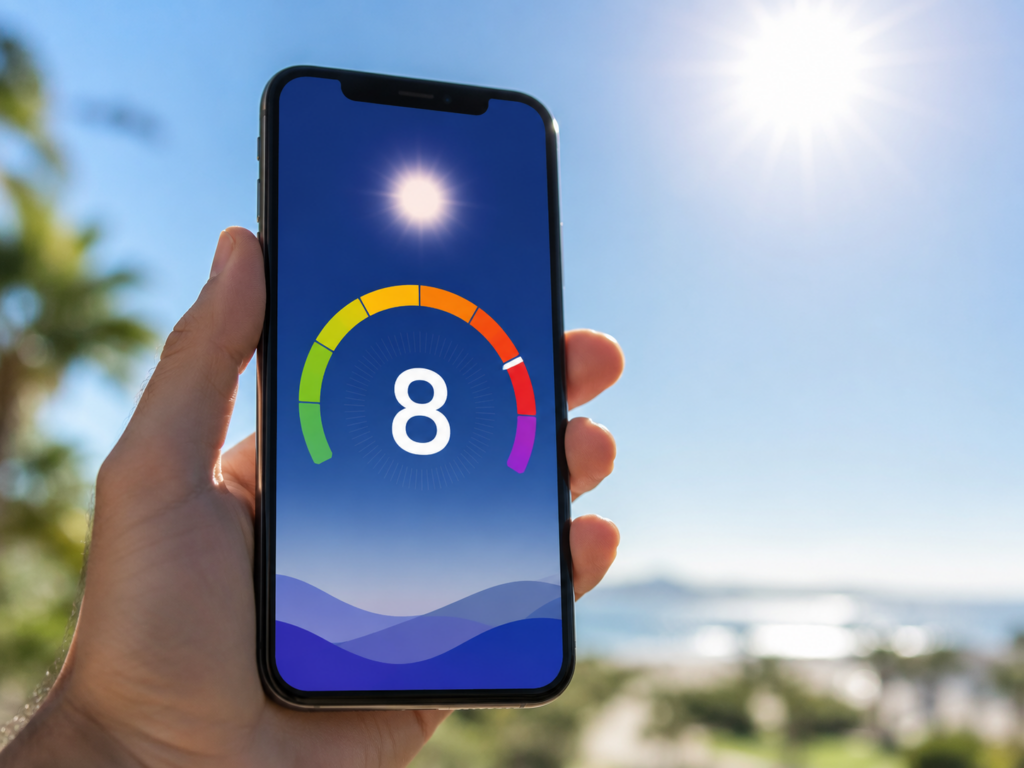
Checking the UV Index can help you decide when to schedule outdoor activities, what clothing to wear, and how often to reapply sunscreen. Even moderate UV levels can cause skin damage over time, especially with prolonged exposure.
Families, coaches, employers, schools, and healthcare organizations can all use the UV Index to support safer outdoor planning. Tracking daily UV levels and local air quality through resources such as the EPA UV Index can make sun protection more intentional and easier to maintain.
Who Should Be Especially Careful During UV Safety Awareness Month?
Everyone can benefit from sun protection, but some people may have a higher risk of UV-related damage. During UV Safety Awareness Month, it is especially important to be mindful of protection for:
- Children and teenagers
- Outdoor workers
- Athletes and coaches
- Older adults
- People with fair skin, light eyes, or a history of sunburns
- People with a personal or family history of skin cancer
- Individuals taking medications that increase sun sensitivity
- Patients with weakened immune systems
People with darker skin tones also need sun protection. While melanin provides some natural defense, it does not eliminate the risk of skin cancer, sun damage, hyperpigmentation, or UV-related eye conditions. UV Awareness Month is a reminder that sun safety applies to everyone.
UV Awareness Month Is a Reminder to Watch for Skin Changes
Sun protection helps reduce risk, but early detection is also important. During UV Awareness Month, people should take time to check their skin for new or changing spots, moles, sores, or unusual growths.
A simple way to remember warning signs is the ABCDE rule for moles:
- A – Asymmetry: One half looks different from the other.
- B – Border: Edges are irregular, blurred, or uneven.
- C – Color: The spot has multiple colors or unusual pigmentation.
- D – Diameter: The spot is larger than a pencil eraser or growing.
- E – Evolving: The spot changes in size, shape, color, texture, or symptoms.
Any concerning skin changes should be evaluated by a qualified healthcare professional. Early diagnosis can make a meaningful difference in treatment options and outcomes.
The Role of Healthcare Providers During UV Safety Awareness Month
Healthcare providers can use UV Safety Awareness Month to educate patients about prevention, early detection, and follow-up care. Primary care providers, dermatologists, urgent care teams, imaging centers, and specialists all play a role in helping patients understand health risks and take preventive action.
Patient education may include reminders to:
- Perform regular skin self-checks
- Schedule dermatology visits for suspicious or changing lesions
- Avoid indoor tanning
- Wear sunscreen and protective clothing daily
- Seek medical attention for unusual skin changes
- Protect the eyes with proper sunglasses
Early evaluation of concerning symptoms can help guide timely diagnosis and treatment planning.
Specialty Focused Radiology: Supporting Providers With Reliable Diagnostic Imaging
At Specialty Focused Radiology, we are a trusted nationwide teleradiology partner providing fast, accurate diagnostic imaging interpretations for hospitals, urgent care centers, imaging facilities, and private practices across the United States. Our board-certified radiologists support healthcare organizations with cancer imaging, final teleradiology reports, preliminary “wet-read” reports, secondary specialty reads, after-hours coverage, emergency support, and subspecialized expertise, including pediatric radiology.
Our team interprets studies across all major imaging modalities, including X-ray, ultrasound, computed radiology, CT, MRI, PET, PET-CT, and 2D and 3D mammography. With a focus on speed, quality, and personalized service, Specialty Focused Radiology helps healthcare providers strengthen patient care through dependable, around-the-clock radiology expertise.

How Our sTAAS Model Helps Healthcare Organizations
Specialty Focused Radiology’s sTAAS teleradiology model is a partnership-based approach designed to give healthcare organizations reliable access to specialty radiologists without the burden of building and maintaining that capability in-house. Rather than functioning as a transactional reading service focused only on volume, sTAAS is structured around long-term clinical, operational, and financial alignment.
Through sTAAS, we embed into your workflows, develop site-specific protocols, support structured service-level agreements, and maintain regular operational communication. This model helps hospitals, urgent care centers, imaging facilities, and private practices improve radiology coverage, reduce staffing pressure, and deliver timely interpretations that support better patient outcomes.
Make UV Safety Awareness Month a Time for Prevention
UV Safety Awareness Month is a valuable reminder that sun protection is a daily health habit, not just a summer concern. UV exposure can increase the risk of skin cancer and contribute to eye damage, but simple steps such as using sunscreen, seeking shade, wearing protective clothing, choosing UV-blocking sunglasses, and checking the UV Index can make a meaningful difference.
As healthcare organizations continue educating patients during UV Awareness Month, reliable diagnostic support remains essential across the continuum of care. Specialty Focused Radiology is here to help providers deliver fast, accurate imaging interpretations backed by board-certified expertise and a service model built around partnership.
To learn more about our teleradiology services and our sTAAS model, contact Specialty Focused Radiology today.
FAQs
UV Safety Awareness Month is observed every July. It is a timely reminder to practice sun protection during the summer months, when many people spend more time outdoors and UV exposure can increase.
The best way to protect your skin is to use multiple layers of sun protection. Apply broad-spectrum SPF 30 or higher sunscreen, seek shade, wear protective clothing, and limit direct sun exposure during peak UV hours.
Yes, UV rays can still reach your skin on cloudy or overcast days. Because clouds do not block all UV radiation, sun protection is still important even when the sun does not feel intense.
Common warning signs include new spots, changing moles, sores that do not heal, irregular borders, unusual colors, or growths that change in size, shape, or texture. Any concerning skin changes should be evaluated by a qualified healthcare professional.