


Every July, Juvenile Arthritis Awareness Month brings attention to a reality many families do not expect: arthritis can affect children, too. While many people associate arthritis with aging or joint wear and tear, juvenile arthritis is different. It refers to a group of autoimmune and inflammatory conditions that can affect children and teens, often causing joint pain, swelling, stiffness, fatigue, and changes in mobility.
For families, Juvenile Arthritis Month is more than a health observance. It is a time to recognize symptoms earlier, support children navigating chronic illness, encourage timely diagnosis, and connect caregivers with medical teams and community resources. It also highlights the importance of accurate diagnostic imaging, coordinated specialty care, and long-term support for children living with juvenile arthritis.
What Is Juvenile Arthritis?
Juvenile arthritis, often abbreviated as JA, is an umbrella term for several autoimmune and inflammatory diseases that affect children under the age of 16. The most common form is juvenile idiopathic arthritis, or JIA. “Idiopathic” means the exact cause is unknown, but the disease involves an overactive immune response that mistakenly attacks healthy tissues.
Unlike adult osteoarthritis, which is often linked to cartilage breakdown over time, juvenile arthritis is not a wear-and-tear condition. It can affect joints, soft tissues, eyes, skin, and in some cases, internal organs. Symptoms may be mild and intermittent for some children, while others experience persistent inflammation that requires ongoing medical management.
Common symptoms may include:
- Joint pain, swelling, warmth, or tenderness
- Morning stiffness or stiffness after rest
- Limping, especially after waking
- Fatigue or reduced activity level
- Fever, rash, or swollen lymph nodes in some forms of JA
- Eye inflammation, which may occur without obvious symptoms
- Difficulty with school, sports, play, or daily movement
Because symptoms can vary widely, Juvenile Arthritis Awareness Month is an important reminder that persistent joint symptoms in children should not be dismissed as “growing pains.”
Why Juvenile Arthritis Awareness Month Matters for Families
Juvenile Arthritis Awareness Month helps families, schools, healthcare providers, and communities better understand the daily challenges children with JA may face. A child with juvenile arthritis may look healthy on the outside while managing pain, fatigue, stiffness, medical appointments, medication schedules, and emotional stress.
For families, Juvenile Arthritis Month can mean:
- Learning how to recognize early warning signs
- Advocating for timely evaluation and specialty referrals
- Understanding the role of imaging and lab testing in diagnosis
- Supporting children physically, emotionally, and socially
- Creating school accommodations when needed
- Connecting with support groups and pediatric rheumatology resources
- Encouraging children to stay active in safe, age-appropriate ways
Awareness also helps reduce stigma. Children with juvenile arthritis may need flexibility with physical activities, classroom participation, or attendance. When teachers, coaches, relatives, and peers understand the condition, children are more likely to feel supported rather than isolated.
Diagnosing Juvenile Arthritis During Juvenile Arthritis Month and Beyond
Diagnosing juvenile arthritis can be complex because no single test confirms every case. Many childhood conditions can cause joint pain, swelling, fever, or fatigue, so clinicians often use a combination of medical history, physical examination, lab testing, imaging, and specialist evaluation.
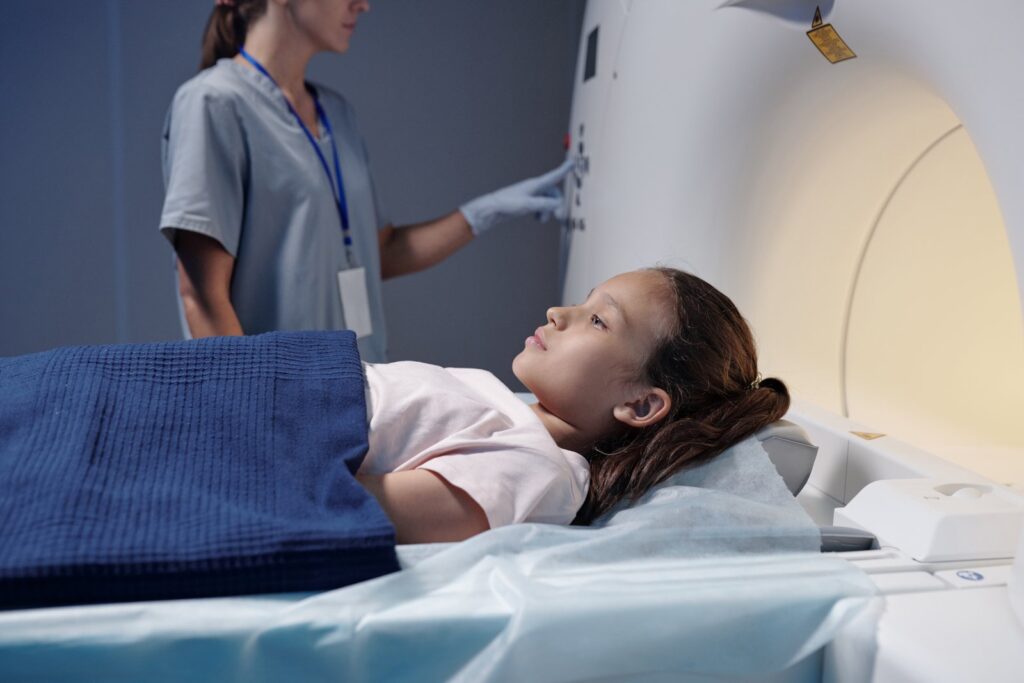
A diagnostic workup may include:
- Medical history: Symptom timeline, pain patterns, morning stiffness, family history, fevers, rashes, or eye symptoms
- Physical examination: Joint swelling, range of motion, tenderness, gait changes, and functional limitations
- Laboratory testing: Blood tests to evaluate inflammation, immune markers, and other possible causes
- Imaging studies: X-ray, ultrasound, MRI, CT, or other imaging when clinically appropriate
- Specialist referral: Pediatric rheumatology evaluation for diagnosis, disease classification, and treatment planning
Diagnostic imaging can play a valuable role in identifying inflammation, joint changes, soft tissue involvement, and complications. Imaging may also help rule out other causes of symptoms, such as trauma, infection, tumors, or orthopedic conditions.
Early diagnosis matters because untreated inflammation can affect joint development, mobility, eye health, growth, and quality of life. During Juvenile Arthritis Awareness Month, families are encouraged to seek medical guidance when a child has ongoing joint swelling, unexplained limping, persistent stiffness, or recurring pain that interferes with daily activities.
The Role of Imaging in Juvenile Arthritis Diagnosis
Imaging is not always used the same way for every child, but it can be an important part of the diagnostic and monitoring process. The right imaging study depends on the child’s symptoms, exam findings, age, and clinical concerns.
Common imaging modalities may include:
- X-ray: Helps evaluate bone alignment, joint changes, growth patterns, and other structural concerns
- Ultrasound: Can help assess joint fluid, soft tissue inflammation, and synovitis in certain cases
- MRI: Provides detailed visualization of joints, cartilage, bone marrow, soft tissue, and inflammation
- CT: May be used selectively when detailed bone evaluation is needed
- PET or PET-CT: May be used in specific clinical scenarios when broader inflammatory or systemic evaluation is indicated
For healthcare organizations, access to subspecialized pediatric radiology interpretation can be especially important. Children are not simply smaller adults; pediatric imaging requires attention to growth plates, age-specific anatomy, developmental changes, radiation considerations, and pediatric disease patterns.
Juvenile Arthritis Treatment: Goals and Care Options
Treatment for juvenile arthritis is personalized based on the type of JA, disease severity, affected joints, systemic symptoms, and the child’s overall health. The goals are to reduce inflammation, relieve pain and stiffness, protect joints and organs, preserve mobility, support growth and development, and help children participate as fully as possible in school, play, sports, and family life.
A treatment plan may include:
- Medications: Anti-inflammatory medications, disease-modifying antirheumatic drugs, biologic therapies, corticosteroids, or other therapies depending on the diagnosis
- Physical therapy: Exercises to improve flexibility, strength, posture, and range of motion
- Occupational therapy: Strategies to support daily activities, hand function, school participation, and adaptive tools
- Eye care: Regular ophthalmology screening, especially because some forms of JA can be associated with silent eye inflammation
- Healthy movement: Low-impact activity, stretching, and safe exercise plans
- Nutrition and sleep support: Healthy routines that support energy, recovery, and overall well-being
- Mental health support: Counseling or peer support when chronic pain, fatigue, or social challenges affect emotional health
Treatment has improved significantly over time, and many children with juvenile arthritis can achieve better symptom control with early, coordinated care. Families should work closely with their child’s healthcare team before starting, stopping, or changing any treatment.
Supporting a Child During Juvenile Arthritis Month
Support for juvenile arthritis goes beyond medical treatment. Children may need help navigating school, social activities, sports, and the emotional impact of living with a chronic condition. Juvenile Arthritis Month is a valuable time for families to reassess what is working, what needs to change, and where additional support may help.
Helpful support strategies include:
- Keep a symptom journal to track pain, stiffness, fatigue, fevers, rashes, and activity limits.
- Prepare questions before appointments so concerns are not overlooked.
- Ask about school accommodations, such as extra time between classes, modified physical education, elevator access, or flexible attendance policies.
- Encourage movement within the child’s care plan, rather than assuming rest is always best.
- Help the child explain JA to friends, teachers, and coaches in age-appropriate language.
- Watch for emotional signs such as frustration, withdrawal, anxiety, or sadness.
- Connect with juvenile arthritis support organizations and family education resources.
Family support is especially important because juvenile arthritis can be unpredictable. A child may feel well one day and struggle the next. Clear communication, flexible routines, and a supportive care team can help families manage flares and maintain a sense of normalcy.
Juvenile Arthritis Awareness Month and the Importance of Coordinated Care
Juvenile arthritis often requires a team-based approach. Pediatricians, pediatric rheumatologists, radiologists, ophthalmologists, physical therapists, occupational therapists, nurses, school staff, and caregivers may all play important roles.
For healthcare providers, Juvenile Arthritis Awareness Month is a reminder of the importance of timely imaging access, accurate interpretation, and efficient communication across care settings. When imaging results are delayed or unclear, diagnosis and treatment planning can also be delayed. Fast, reliable radiology support helps clinical teams move forward with greater confidence.
This is especially important for hospitals, urgent care centers, imaging facilities, and private practices that serve pediatric patients but may not always have immediate access to pediatric radiology subspecialists.
How Specialty Focused Radiology Supports Pediatric Imaging and Teleradiology
At Specialty Focused Radiology, we are a trusted nationwide teleradiology partner providing fast, accurate diagnostic imaging interpretations for hospitals, urgent care centers, imaging facilities, and private practices across the United States. Our board-certified radiologists provide after-hours coverage, final reads, preliminary reports, second opinions, and subspecialized support across major imaging modalities, including X-ray, CT, MRI, PET, ultrasound, and 2D and 3D mammography.
For organizations caring for children with conditions such as juvenile arthritis, our pediatric radiology teleradiology coverage helps support accurate, age-appropriate imaging interpretation. We understand that pediatric cases require specialized attention, clinical context, and dependable turnaround times. Whether a facility needs rapid wet reads, secondary specialty reads, final teleradiology reports, virtual locum coverage, fractional radiology staffing, or pediatric imaging support, Specialty Focused Radiology helps providers deliver more reliable care through accessible, around-the-clock radiology expertise.

sTAAS: A Smarter Teleradiology Model for Long-Term Imaging Support
Specialty Focused Radiology also offers sTAAS, our Specialty Teleradiology-as-a-Service model. Unlike transactional teleradiology services that focus only on read volume, sTAAS is a partnership-based model designed to align with each organization’s clinical, operational, and financial goals.
Through sTAAS, we embed into your workflows, develop site-specific protocols, support structured service-level agreements, and participate in regular operational syncs. This approach gives healthcare organizations reliable access to specialty radiologists without the burden of building and maintaining that capability entirely in-house.
For healthcare teams managing pediatric imaging, after-hours studies, urgent reads, or specialty interpretations, sTAAS provides a scalable way to strengthen radiology coverage while maintaining quality, consistency, and accountability.
Use Juvenile Arthritis Awareness Month to Strengthen Care and Support
Juvenile Arthritis Awareness Month is a powerful opportunity to educate families, support children, encourage earlier diagnosis, and strengthen the systems of care surrounding pediatric patients. For families, Juvenile Arthritis Month means knowing that persistent joint pain, swelling, stiffness, or limping deserves attention. For healthcare providers, it reinforces the importance of timely diagnosis, coordinated care, and reliable imaging interpretation.
Specialty Focused Radiology is here to help hospitals, urgent care centers, imaging facilities, and private practices deliver faster, more accurate diagnostic imaging support when it matters most. To learn more about our nationwide teleradiology services, pediatric radiology coverage, second opinions, final reads, rapid preliminary reports, and sTAAS partnership model, contact Specialty Focused Radiology today.
FAQs
Juvenile Arthritis Awareness Month takes place every July. During this month, advocacy organizations, healthcare providers, and families work to educate the public about juvenile arthritis and the importance of early diagnosis and ongoing care.
Juvenile arthritis is an umbrella term for autoimmune and inflammatory conditions that affect children under the age of 16. The most common type is juvenile idiopathic arthritis, which occurs when the immune system mistakenly attacks healthy tissues and causes joint inflammation.
Juvenile arthritis is not the same as the most common forms of adult arthritis. While adult osteoarthritis is often related to wear and tear, juvenile arthritis is usually linked to immune system dysfunction and inflammation.
Early signs of juvenile arthritis may include joint swelling, stiffness, pain, limping, fatigue, and reduced movement. Morning stiffness or difficulty moving after rest can be especially important warning signs for families to discuss with a healthcare provider.