


July is Chronic Disease Awareness Month, a time to bring greater attention to the long-term health conditions that affect millions of people across the United States. Chronic diseases can shape a person’s daily life, influence long-term care needs, and place significant demands on healthcare systems. Building chronic disease awareness helps patients, families, and providers recognize risks earlier, encourage preventive care, and support better outcomes through timely diagnosis and ongoing management.
This month is also a reminder that many chronic conditions are connected by shared risk factors, including lifestyle habits, family history, age, environmental exposures, and access to preventive healthcare. While not every chronic disease can be prevented, many can be delayed, detected earlier, or managed more effectively with the right care strategy.
Common Conditions Highlighted During Chronic Disease Awareness Month
Chronic diseases include a wide range of conditions that may affect the heart, lungs, brain, endocrine system, digestive system, kidneys, bones, and other parts of the body. Some of the most common conditions discussed during Chronic Disease Awareness Month include the following.
Heart Disease and Cardiovascular Conditions
Heart disease remains one of the most serious chronic health concerns in the United States. It can include coronary artery disease, heart failure, arrhythmias, and complications related to high blood pressure or vascular disease.
Common risk factors include high blood pressure, high cholesterol, smoking, diabetes, obesity, physical inactivity, poor nutrition, and family history. Imaging and diagnostic testing can play a key role in evaluating heart and vascular health, identifying calcifications, assessing blockages, and supporting treatment planning.
Diabetes
Diabetes is a chronic condition that affects how the body regulates blood sugar. Over time, poorly controlled diabetes can contribute to complications involving the heart, kidneys, nerves, eyes, and blood vessels.
Chronic disease awareness is especially important for diabetes because early intervention can help reduce the risk of long-term complications. Routine lab testing, preventive exams, lifestyle changes, medication adherence, and ongoing monitoring all support better disease control.
Cancer
Cancer includes many diseases characterized by abnormal cell growth. Some cancers develop slowly, while others progress more aggressively. Screenings such as mammography, low-dose CT for eligible lung cancer screening patients, colon cancer screening, and other diagnostic evaluations can help detect cancer earlier, when treatment may be more effective.
Radiology is central to cancer care, from early cancer detection and staging to treatment response monitoring and long-term surveillance.
Chronic Respiratory Diseases
Chronic respiratory diseases include chronic obstructive pulmonary disease, asthma, pulmonary fibrosis, and other long-term lung conditions. Symptoms may include shortness of breath, chronic cough, wheezing, fatigue, and reduced exercise tolerance.
CT imaging, chest X-rays, and other diagnostic tools can help evaluate lung structure, identify disease progression, and guide care decisions. For patients with chronic lung disease, consistent monitoring can make a meaningful difference in long-term management.
Kidney Disease
Chronic kidney disease can progress silently and may not cause noticeable symptoms in early stages. Risk factors include diabetes, high blood pressure, older age, family history, and certain medications or medical conditions.
Ultrasound, CT, MRI, and other imaging studies may be used to evaluate kidney size, masses, obstruction, stones, cysts, or structural abnormalities that affect kidney health.
Neurological and Autoimmune Conditions
Multiple sclerosis, certain autoimmune disorders, arthritis, and other chronic inflammatory or neurological conditions often require long-term evaluation. MRI is especially useful for visualizing soft tissues, the brain, spine, joints, and areas of inflammation or structural change.
For patients with chronic neurological or autoimmune conditions, imaging may help confirm diagnoses, monitor disease progression, and assess treatment effectiveness.
Common Risk Factors for Chronic Disease
One of the central goals of Chronic Disease Awareness Month is to help people understand risk factors. Some risks cannot be changed, but others can be reduced with preventive action.
Common chronic disease risk factors include:
- Tobacco use or exposure to secondhand smoke
- Poor nutrition
- Physical inactivity
- Excessive alcohol use
- High blood pressure
- High cholesterol
- Obesity
- Diabetes or prediabetes
- Family history of chronic disease
- Older age
- Long-term stress
- Poor sleep
- Environmental or occupational exposures
- Limited access to preventive healthcare
Understanding these risks does not mean every chronic disease can be avoided. It does, however, help patients and providers identify opportunities for earlier screening, more personalized care, and better long-term management.
Chronic Disease Awareness and Prevention Tips for Better Health
Chronic disease prevention is not about one single habit. It is about building a sustainable approach to health that includes prevention, early detection, and consistent care. During Chronic Disease Awareness Month, individuals can take practical steps to support long-term wellness.
Helpful prevention tips include:
- Stay up to date on screenings. Recommended screenings may help detect cancer, heart disease, diabetes, osteoporosis, and other conditions earlier.
- Know your family history. Sharing family health history with a provider can help guide personalized screening recommendations.
- Maintain a heart-healthy diet. Emphasize fruits, vegetables, whole grains, lean proteins, and healthy fats while limiting excess sodium, added sugars, and highly processed foods.
- Move regularly. Physical activity supports heart health, blood sugar control, weight management, joint function, and mental well-being.
- Avoid tobacco. Quitting smoking can reduce the risk of cancer, heart disease, stroke, COPD, and other chronic conditions.
- Limit alcohol. Reducing alcohol intake can support liver health, blood pressure control, and overall wellness.
- Manage blood pressure, cholesterol, and blood sugar. Routine checkups and lab work can help identify changes before complications develop.
- Prioritize sleep and stress management. Poor sleep and chronic stress can affect inflammation, metabolism, heart health, and immune function.
- Follow through with diagnostic imaging when recommended. Timely imaging can help clinicians detect disease, monitor progression, and adjust care plans.
The Role of Radiology in Chronic Disease Awareness and Management
Radiology is often the lens of modern medicine. For many chronic diseases, imaging provides a non-invasive way to see what is happening inside the body, helping clinicians detect disease earlier, monitor changes over time, and evaluate whether treatment is working.
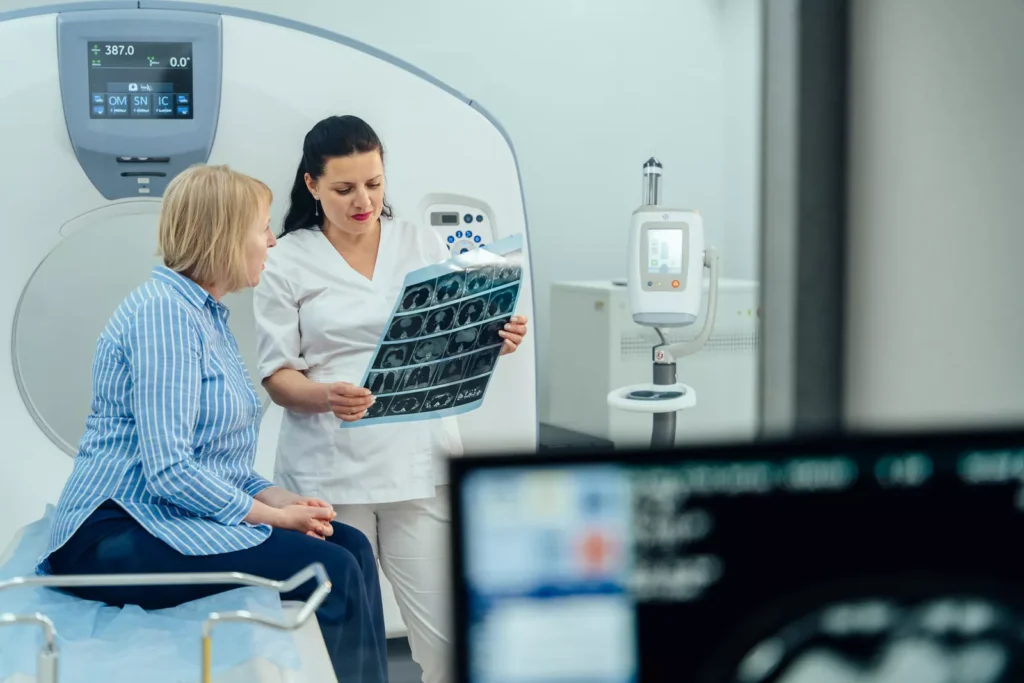
During Chronic Disease Awareness Month, it is important to recognize how diagnostic imaging supports care across the full patient journey.
Early Detection and Diagnosis
Imaging can identify structural or functional abnormalities before symptoms become severe. For example, low-dose CT may be used for lung cancer screening in eligible patients, mammography can detect breast cancer at earlier stages, and CT or MRI may reveal signs of cardiovascular, neurological, abdominal, or musculoskeletal disease.
Early detection can give patients and providers more options, more time to plan, and a better opportunity to manage disease proactively.
Tracking Disease Progression
Many chronic conditions require regular monitoring. Patients with COPD, liver disease, kidney disease, cancer, autoimmune conditions, or neurological disorders may need imaging at different points in their care plan.
CT, MRI, ultrasound, PET, PET-CT, X-ray, and mammography each play different roles depending on the condition, body system, and clinical question. The right imaging study can help providers understand whether a disease is stable, improving, or progressing.
Identifying Incidental Findings
Sometimes imaging performed for one concern reveals an unrelated finding that may require follow-up. These incidental findings can include early signs of atherosclerosis, lung nodules, fatty liver disease, kidney masses, or airway abnormalities.
When interpreted carefully and communicated clearly, these findings may create opportunities for preventive care, additional evaluation, and earlier intervention.
Balancing Imaging Benefits and Safety
Repeated imaging may be necessary for chronic disease management, but it should be guided by appropriate clinical protocols. Healthcare teams must balance the diagnostic value of imaging with radiation exposure, patient history, urgency, and the need for follow-up.
Evidence-based imaging protocols, subspecialty expertise, and consistent reporting standards help ensure imaging is used safely, appropriately, and effectively.
Specialty Focused Radiology: Supporting Chronic Disease Awareness Through Reliable Teleradiology
Specialty Focused Radiology is a trusted nationwide teleradiology partner providing fast, accurate diagnostic imaging interpretations for hospitals, urgent care centers, imaging facilities, and private practices across the U.S. Our board-certified radiologists support healthcare organizations with final reads, preliminary “wet-read” reports, second opinions, after-hours coverage, and subspecialized imaging interpretation across major modalities, including X-ray, CT, MRI, PET, ultrasound, PET-CT, and 2D and 3D mammography.
As chronic disease volumes continue to place pressure on healthcare systems, reliable radiology coverage is essential. Specialty Focused Radiology helps providers maintain diagnostic quality, reduce coverage gaps, support timely patient care, and access subspecialized expertise, including pediatric radiology teleradiology, without having to build every capability in-house.

How sTAAS Helps Healthcare Organizations Strengthen Imaging Support
Specialty Focused Radiology’s sTAAS model, or Specialty Teleradiology as a Service, is designed for healthcare organizations that need more than transactional read volume. sTAAS is a partnership-based teleradiology model that gives hospitals, urgent care centers, imaging facilities, and private practices reliable access to specialty radiologists while aligning service delivery with clinical, operational, and financial goals.
Through sTAAS, Specialty Focused Radiology embeds into existing workflows, develops site-specific protocols, supports structured service-level agreements, and maintains regular operational communication. This model helps healthcare organizations extend subspecialty coverage, reduce staffing dependencies, maintain quality across modalities, scale imaging services, and support around-the-clock access to radiology expertise.
For chronic disease care, that kind of dependable imaging partnership can make a meaningful difference. Timely interpretations, subspecialized reads, second opinions, and consistent reporting can help clinicians detect disease earlier, monitor progression, and make informed care decisions for patients who need long-term support.
Partner With Specialty Focused Radiology for Reliable Teleradiology Support
Chronic Disease Awareness Month is a valuable opportunity to educate patients, encourage preventive care, and strengthen the systems that support long-term health. Common conditions such as heart disease, cancer, diabetes, COPD, kidney disease, and neurological disorders require awareness, early detection, and coordinated management.
For healthcare providers, chronic disease awareness also means ensuring patients have access to accurate diagnostics when they need them. Radiology plays a critical role in identifying disease, tracking progression, guiding treatment, and supporting better outcomes.
If your organization needs dependable teleradiology coverage, subspecialized reads, after-hours support, second opinions, or a long-term specialty radiology partner, contact Specialty Focused Radiology today. Learn more about our teleradiology services and discover how our sTAAS model can help your team deliver fast, accurate, and patient-centered imaging support.
FAQs
Common chronic diseases include heart disease, diabetes, cancer, chronic obstructive pulmonary disease, chronic kidney disease, stroke, arthritis, and certain neurological or autoimmune conditions. These conditions often require ongoing care, regular monitoring, and coordinated support from healthcare providers.
Not all chronic diseases can be fully prevented, especially when genetics, age, or unavoidable medical factors are involved. However, many chronic conditions can be delayed, detected earlier, or managed more effectively through screenings, regular checkups, physical activity, healthy eating, tobacco avoidance, and proper management of blood pressure, cholesterol, and blood sugar.
Radiology supports early detection by identifying structural or functional changes inside the body before a condition becomes more advanced. For example, mammography can help detect breast cancer, low-dose CT may be used for eligible lung cancer screening patients, and MRI can help evaluate neurological or soft tissue conditions.
Different imaging tests are used depending on the condition being evaluated. CT scans may help assess lung disease or vascular concerns, MRI is often used for soft tissue and neurological conditions, ultrasound can evaluate organs such as the liver and kidneys, and mammography supports breast health screening and surveillance.