

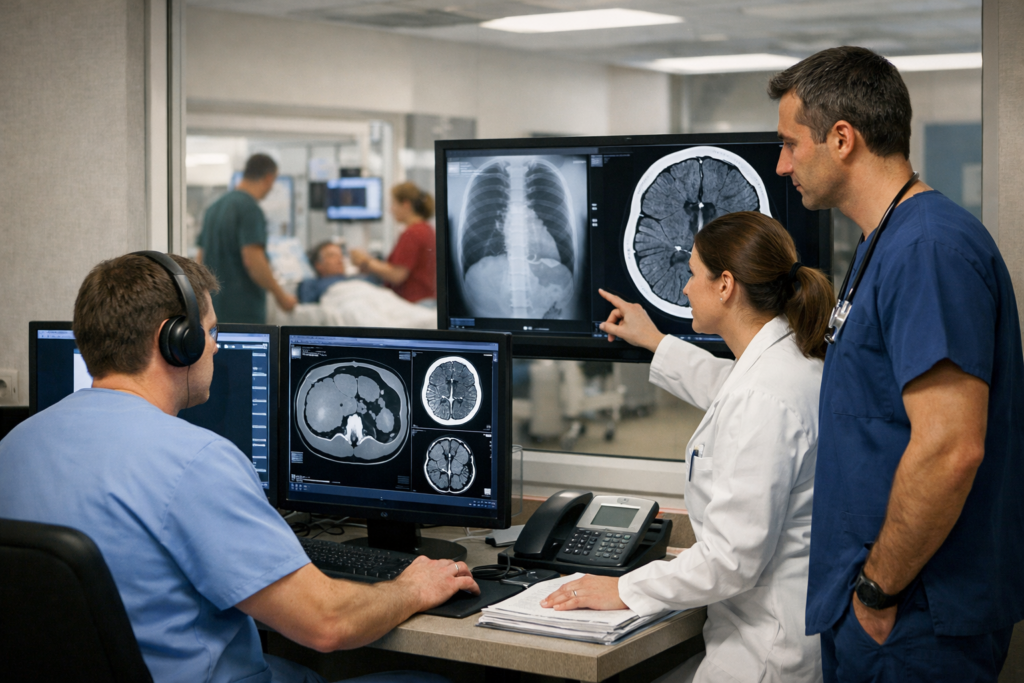
Emergency departments don’t have margin for error, and neither does radiology. I trained in emergency and pediatric imaging — I understand the pressure ED physicians are under when they’re waiting on a read for a trauma or a pediatric case at 2 a.m. Improving ED radiology turnaround time isn’t just an operational goal. It’s a patient safety issue, and hospitals need to treat it that way.
Why ED Radiology Turnaround Time Matters
In the emergency setting, every minute counts. Imaging is often central to diagnosing stroke, trauma, pulmonary embolism, appendicitis, fractures, internal bleeding, pediatric emergencies, and countless other time-sensitive conditions. When ED radiology turnaround time slows down, emergency physicians may be forced to delay disposition decisions, postpone treatment, or proceed without the level of diagnostic certainty they need.
Faster and more dependable ED radiology interpretation helps hospitals:
- Reduce patient length of stay in the emergency department
- Support quicker admission, discharge, or transfer decisions
- Improve care coordination among ED physicians, specialists, and nursing teams
- Reduce patient dissatisfaction caused by long waits
- Strengthen clinical confidence in urgent decision-making
- Improve throughput during nights, weekends, holidays, and surge periods
In short, improving ED radiology turnaround time supports both better patient care and better hospital operations.
What Causes Delays in ED Radiology Turnaround Times?
Hospitals rarely struggle with emergency imaging turnaround for just one reason. More often, delays result from several overlapping challenges.
Limited After-Hours Coverage
Many hospitals do not have enough radiology staff to maintain consistent coverage overnight, on weekends, or during holidays. Even strong internal teams can become stretched thin when imaging volume spikes outside normal business hours. This often leads to delayed reads, slower report finalization, and increased pressure on emergency physicians.
Growing Imaging Volume and Case Complexity
Emergency imaging volume has increased across many care settings, and the studies themselves are often more complex. CT, MRI, ultrasound, and hybrid imaging all require prompt interpretation, yet more advanced exams also demand greater expertise. When routine staffing models are not built for sustained high demand, ED radiology turnaround time can suffer.
Generalist Coverage for Subspecialty Cases
Emergency departments regularly generate cases that benefit from subspecialty interpretation, including pediatric imaging, neuroradiology, musculoskeletal trauma, body imaging, and breast-related follow-up concerns. If those studies are routed only through general coverage without access to specialized expertise, reports may take longer, second opinions may be needed, or diagnostic uncertainty may increase.
Radiologist Burnout and Staffing Gaps
Recruiting and retaining radiologists remains difficult for many hospitals. Vacancies, vacation schedules, sick coverage, and burnout can all create gaps in availability. When remaining staff absorb extra workload, turnaround times often slow further, especially in high-pressure ED environments.
Workflow Inefficiencies and Queue Management Problems
Sometimes the issue is not radiologist quality but workflow design. Studies may not be prioritized properly, communication between the ED and radiology may be inconsistent, or critical exams may sit in long queues behind less urgent cases. Poor handoffs and inefficient worklists can quietly add significant delay to ED radiology turnaround time.
Delays in Final Reads and Follow-Up Reporting
Preliminary reads may help move a case forward, but if final reports are delayed too long, hospitals may still face downstream problems. Delayed final interpretations can complicate inpatient handoffs, billing, compliance, and continuity of care.
How Subspecialty Support Improves ED Radiology Turnaround Time
Subspecialty support gives hospitals access to radiologists with targeted expertise across specific modalities and clinical areas. In the ED setting, this can significantly improve both speed and accuracy.
Faster Interpretation for Complex Cases
A radiologist with focused experience in a particular area can often identify key findings more efficiently than a generalist working outside their primary area of concentration. That matters in emergency cases where subtle but important abnormalities must be recognized quickly. Subspecialty support can reduce hesitation, streamline reporting, and improve confidence in time-sensitive diagnoses.
Better Coverage Across High-Demand Hours
Hospitals can use subspecialty teleradiology support to fill coverage gaps during evenings, overnights, weekends, and peak census periods. This helps prevent worklist backlogs and supports more consistent ED radiology turnaround time, even when in-house resources are limited.
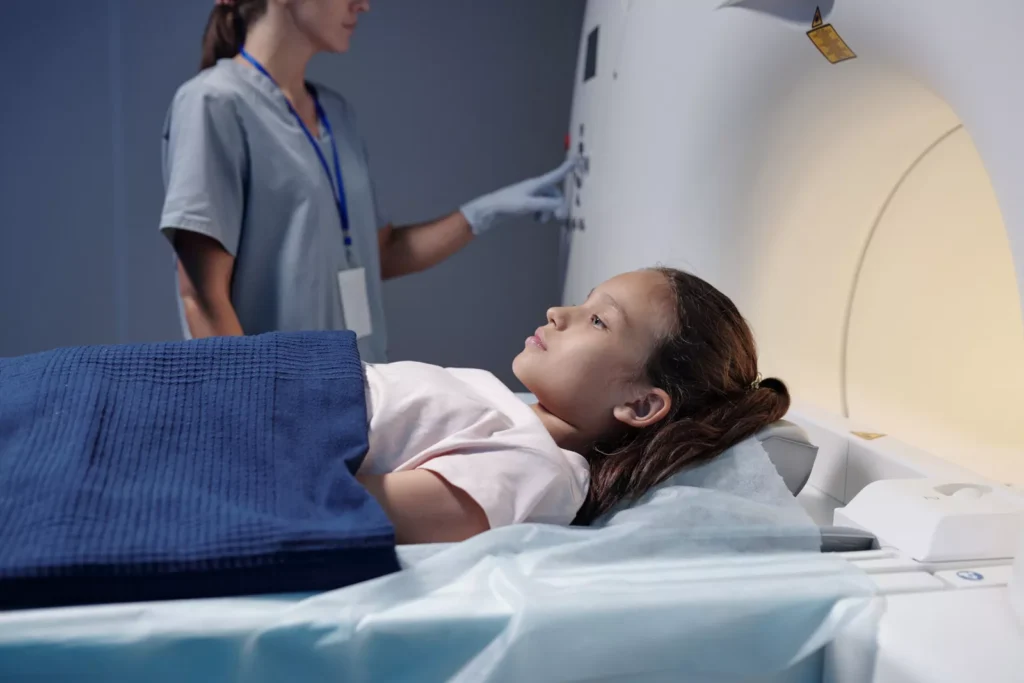
Improved Pediatric ED Radiology Support
Pediatric imaging requires special expertise because anatomy, disease presentation, imaging protocols, and safety considerations differ from adult patients. Hospitals that see pediatric emergency cases benefit from access to pediatric radiology specialists who can help improve interpretation quality while maintaining speed.
Reduced Burden on In-House Teams
Subspecialty support does not replace internal radiology teams. Instead, it strengthens them. By sharing workload with a trusted teleradiology partner, hospitals can reduce fatigue, improve scheduling flexibility, and allow internal radiologists to focus where they add the most value.
Stronger Clinical Confidence for ED Providers
Emergency physicians depend on radiology reports to guide urgent care decisions. When hospitals have access to subspecialized reads, final reports, and rapid second opinions, ED teams can move forward with greater confidence. That leads to more efficient care delivery and better collaboration across departments.
Practical Ways Hospitals Can Improve ED Radiology Turnaround Time
Hospitals looking to improve ED radiology performance should focus on both staffing and workflow strategy. The following best practices can make a meaningful difference.
1. After-Hour Teleradiology Support
Round-the-clock coverage is essential for consistent emergency imaging performance. Hospitals that rely only on daytime staffing models often struggle during overnight or weekend surges. A teleradiology partner can provide dependable support when internal resources are unavailable or overloaded.
2. Use Preliminary and Final Read Workflows Strategically
Rapid preliminary “wet-read” reports can help emergency physicians make immediate treatment decisions, while final reads ensure documentation accuracy and continuity of care. A balanced workflow that includes both can improve ED radiology turnaround time without sacrificing report quality.
3. Route Cases by Modality and Clinical Need
Not every emergency imaging study should be handled the same way. Hospitals can improve turnaround by routing exams based on urgency, complexity, modality, and need for subspecialty review. Prioritized worklists and clear escalation pathways help reduce delays.
4. Strengthen Pediatric Radiology Coverage
Hospitals that treat children in the emergency setting should not overlook the value of pediatric-specific support. Access to pediatric radiology expertise can improve both turnaround and diagnostic accuracy for younger patients.
5. Use Fractional Staffing to Cover Predictable Gaps
Some hospitals do not need a full additional radiologist but do need help during recurring high-volume periods. Fractional FTE radiology staffing and virtual locum support can provide flexible after-hours coverage without the cost and complexity of a full-time hire.
6. Improve Communication Between the ED and Radiology
Even the best radiology team will struggle if communication is unclear. Hospitals should establish clear expectations for urgent findings, study prioritization, callback processes, and escalation protocols. Better communication supports faster action on critical results.
7. Track Turnaround Metrics and Identify Bottlenecks
Hospitals should measure more than just average report time. Looking at turnaround by modality, shift, acuity level, and staffing pattern can reveal where the real delays occur. Once the bottlenecks are visible, leaders can make more targeted improvements.
The Role of Teleradiology in Modern ED Radiology Performance
Teleradiology has become a critical operational tool for hospitals that need dependable emergency imaging support. It enables healthcare organizations to maintain timely coverage, access specialized expertise, and scale support based on demand.

For many hospitals, the real advantage is flexibility. A strong teleradiology partner can provide:
- Rapid preliminary reports for urgent cases
- Final teleradiology reports for continuity
- Secondary specialty reads for added diagnostic confidence
- Fractional FTE staffing support for recurring gaps
- Virtual locum coverage for after-hours and emergency needs
- Broad modality support across X-ray, ultrasound, CR, CT, MRI, PET, PET-CT, and 2D and 3D mammography
- Pediatric teleradiology coverage when specialized expertise is needed
With the right support structure, hospitals can improve ED radiology turnaround time while maintaining quality, reducing staff strain, and supporting better patient care.
Why Subspecialty Support Is a Competitive Advantage for Hospitals
Having subspecialty coverage available in the ED isn’t a luxury — it’s increasingly an expectation. When a complex pediatric case or a subtle neurological finding comes through overnight, having a radiologist with focused expertise on that study changes the outcome. That’s why we built our team to include fellowship-trained subspecialists across pediatric radiology, MSK, body imaging, and more. Hospitals that leverage that depth see it reflected in their ED performance metrics and, more importantly, in their patient outcomes.
Specialty Focused Radiology: Trusted Nationwide Teleradiology Support
At Specialty Focused Radiology, we are a trusted nationwide teleradiology partner providing fast, accurate diagnostic imaging interpretations for hospitals, urgent care centers, imaging facilities, and private practices. Our U.S. board-certified radiologists deliver comprehensive teleradiology coverage, including final reads, preliminary reports, and second opinions across all major imaging modalities, including X-ray, CT, MRI, PET, Ultrasound, and 3D Mammography.
To support seamless staffing and better ED radiology turnaround time, we also offer fractional FTE staffing solutions and subspecialized coverage, including pediatric radiology. With a strong focus on speed, quality, and personalized service, we help healthcare providers improve workflow efficiency and deliver better patient outcomes through reliable, around-the-clock radiology expertise.

Improve ED Radiology Turnaround Time With the Right Partner
Hospitals that want to improve ED radiology turnaround time need more than a faster queue. They need a smarter, more scalable support model that combines speed, accuracy, and subspecialty expertise. From after-hours coverage and preliminary reads to final reports and pediatric radiology support, the right teleradiology partner can help eliminate delays and strengthen emergency care delivery.If your organization is looking for a dependable way to improve ED radiology performance, reduce staffing pressure, and expand access to subspecialty support, contact Specialty Focused Radiology today to get started.
FAQs
When imaging reports are delivered quickly, emergency physicians can diagnose conditions sooner and start treatment faster. This can reduce unnecessary waiting, shorten length of stay, and improve the overall quality of emergency care.
Hospitals can improve ED radiology turnaround time by optimizing workflows, prioritizing urgent cases, and adding 24/7 teleradiology coverage. Access to subspecialty radiologists can also help speed up interpretation for more complex emergency imaging studies.
Teleradiology helps hospitals maintain consistent ED radiology coverage by providing remote access to qualified radiologists, especially during nights, weekends, and high-volume periods. This support can improve turnaround times, reduce backlogs, and strengthen continuity of care.
Services such as preliminary wet reads, final teleradiology reports, second-opinion reads, fractional FTE staffing, virtual locum coverage, and pediatric subspecialty support can all strengthen ED radiology operations. Together, these solutions help hospitals improve speed, quality, and reliability.